Air Conditioning Installation Edinburgh
Air conditioning installation in Edinburgh has grown steadily in demand as both homeowners and businesses seek reliable climate control through unpredictable Scottish summers and cold winters. Specialists such as Thermatek Heating and Cooling carry out air conditioning installation Edinburgh projects across residential and commercial properties, working with leading brands including Mitsubishi Electric, Daikin, and Samsung. A typical split-system installation takes one to two days, requires minimal structural work, and delivers measurable results such as stable indoor temperatures between 18°C and 24°C year-round. Costs vary depending on the number of indoor units, the building layout, and the system capacity required, with most single-room domestic installations falling in the £1,800–£3,500 range.
Why Edinburgh Homes Are Installing Air Conditioning Now
Summer temperatures in Edinburgh have climbed noticeably over the past decade, and properties with south-facing glazing or poor ventilation regularly see indoor temperatures above 28°C during July and August. Split-unit air conditioning addresses this directly: a wall-mounted indoor unit circulates cooled air while a compact outdoor unit dissipates heat, with no need for a window aperture or portable unit dragging across floors. The technology has also become significantly more affordable, making it a practical option for a standard semi-detached or tenement flat, not just commercial premises.
Beyond summer comfort, modern split systems also provide efficient supplementary heating in shoulder seasons, which matters in a Scottish climate where mild but damp autumn days outnumber genuinely cold ones. Many Edinburgh homeowners treat air conditioning as a year-round climate control investment rather than a seasonal luxury.

What Installation Involves
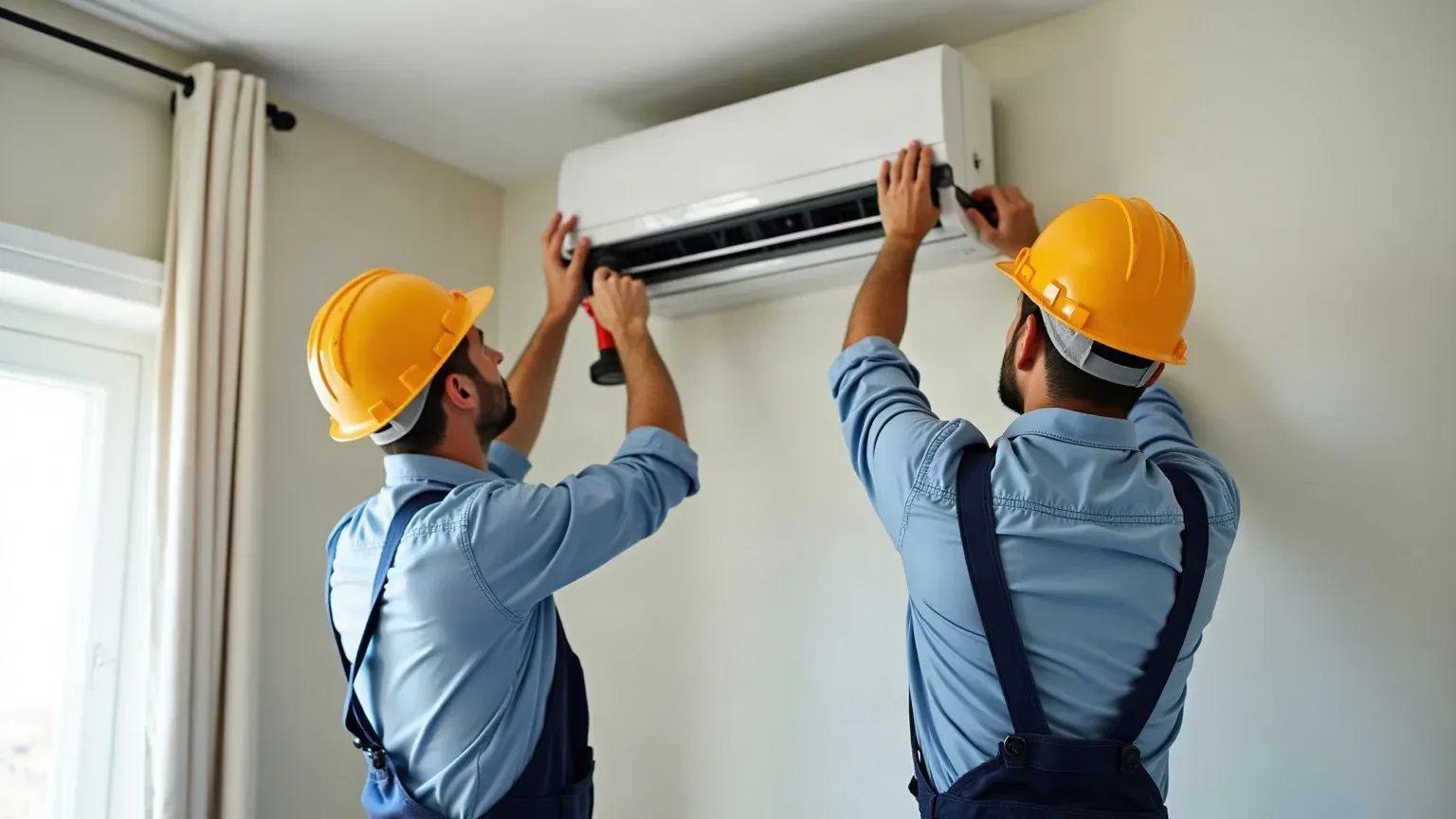
A typical single-room installation takes four to six hours. The engineer mounts the indoor unit on an interior wall, drills a core hole through the external wall for the refrigerant pipework and cabling, positions the outdoor condenser unit on a suitable bracket or ground slab, and pressure-tests the system before commissioning. All refrigerant handling must be carried out by an F-Gas certified (Category I) engineer, as required by UK law.
Multi-room systems follow the same principle but connect several indoor units to one or two outdoor condensers. This approach suits Edinburgh tenements where running separate outdoor units on a shared facade is impractical or prohibited by the title deeds. A three-to-five zone multi-split installation is more disruptive, typically requiring a day's work across the property, plus agreed routing for pipework through walls or ceiling voids.
Choosing the Right System
For most Edinburgh homeowners cooling a single bedroom or living room, a single split unit is the straightforward choice. Capacity is measured in kilowatts: a 2.5 kW unit suits a room up to roughly 20 square metres, while a 3.5–5 kW unit handles larger open-plan spaces. Oversizing wastes energy and creates uncomfortable temperature swings; undersizing means the unit runs continuously without reaching target temperature.
If you want cooling across several rooms without multiple outdoor units cluttering the exterior, a multi-split system is the practical answer. Leading brands such as Worcester Bosch, Vaillant, Ideal, and Baxi all supply systems compatible with residential retrofit in Scottish stone-built properties, where wall thicknesses and core drilling requirements differ from modern cavity-wall construction.

Air Conditioning Installation Cost in Edinburgh
A single split-unit supply and fit for a typical Edinburgh home room costs £1,500–£2,500. That figure covers the unit, labour, refrigerant charge, electrical connection to a fused spur, and commissioning. It does not include decorative trunking to conceal pipework, any electrical consumer unit upgrades, or scaffolding for awkward external access.
A multi-split system covering three to five zones sits in the range of £3,500–£7,000. Commercial fit-outs are quoted separately, as pipe runs and zoning complexity vary too widely for a flat rate. Both price ranges assume a standard Edinburgh property; listed buildings, properties with restricted external wall access, or top-floor tenements with complex pipe routing may attract additional charges that an engineer can quantify at a survey.
What Affects the Final Price
Pipe run length between the indoor and outdoor units is the biggest variable. A short three-metre run through an exterior wall is straightforward; a ten-metre run through a roof void adds materials and time. Electrical work is another factor: if the nearest suitable circuit is distant from the unit location, a longer cable run increases cost. Some Edinburgh tenements also require written consent from the factor or co-proprietors before any penetration of shared walls, which can add lead time.
Air Conditioning Installation Regulations
No building warrant is required for a standard domestic split-unit installation in Scotland in most cases, but there are conditions. The outdoor unit must not protrude beyond the building's principal elevation if the property faces a road, and in conservation areas such as the New Town or Marchmont, permitted development rights may be restricted entirely. Checking with Edinburgh City Council's planning department before booking installation avoids the cost of retrospective consent or removal.
All refrigerant work falls under the F-Gas Regulation, which requires installers to hold Category I F-Gas certification. Gas Safe registration is not relevant to air conditioning systems, though it is mandatory for any gas boiler work carried out at the same property. Any electrical connection must comply with BS 7671 wiring regulations, and a minor works certificate should be issued on completion.

Home Air Conditioning Systems - What to Expect Long-Term
A well-installed split unit from a reputable brand lasts 12–15 years with annual servicing. Filters require cleaning every four to six weeks during heavy use, a ten-minute task the homeowner handles. An annual service by an F-Gas certified engineer covers refrigerant pressure checks, coil cleaning, drain pan inspection, and electrical connection review, keeping the system running at rated efficiency.
Efficiency matters in practice. Air conditioning systems move heat rather than generate it, which makes them far more efficient than resistive electric heaters. In heating mode, the same technology that forms an air source heat pump (ASHP) applies: the unit extracts heat from outside air and moves it indoors, achieving a coefficient of performance (COP) of 2.5–3.5, meaning 250–350% efficiency relative to the electricity consumed. That performance applies to the heating function of a dual-mode split unit operating in Edinburgh's climate.
Air Conditioning Versus a Dedicated Heat Pump
A dual-mode split unit handles supplementary heating well, but it is sized and configured for cooling first. A dedicated air source heat pump (ASHP) is engineered from the ground up as a heating system, typically connected to underfloor heating or low-temperature radiators, and is the appropriate replacement for a gas or oil boiler. The two systems serve different primary functions and are priced differently; comparing them directly leads to confusion at the specification stage.
Choosing Air Conditioning Installers in Edinburgh
Verify F-Gas Category I certification before any installer visits the property. Ask to see the engineer's registration number, and check that the company carries public liability insurance for a minimum of £2 million. References from recent Edinburgh installations are useful; stone-built Victorian properties present different challenges from modern new-builds, so prior local experience is a genuine advantage.
Response time matters if you want installation scheduled around a specific date. Most reputable Edinburgh installers book two to four weeks ahead during the summer peak; contacting in spring gives more flexibility on scheduling and may avoid the premium rates some companies charge during high-demand periods.
To get an accurate quote, have the room dimensions, your preferred indoor unit location, and photos of the proposed external wall ready before the survey visit. That information allows an engineer to estimate pipe run length, identify any access constraints, and provide a firm written price rather than a provisional estimate.

Frequently Asked Questions
Air Conditioning Installation Edinburgh Cost
A single split-unit installation in a typical Edinburgh room costs £1,500–£2,500 for supply and fit, including the unit, refrigerant charge, and electrical connection. A multi-split system covering three to five zones costs £3,500–£7,000. Listed buildings, conservation areas, or complex pipe routes can add to those figures, so a site survey gives the most reliable price.
Domestic Air Conditioning Installation
Domestic air conditioning in Edinburgh most commonly uses a split system: a wall-mounted indoor unit connected by refrigerant pipework through an exterior wall to an outdoor condenser unit. A single-room installation takes four to six hours and requires no building warrant in most cases. All refrigerant work must be carried out by an F-Gas certified (Category I) engineer.
Air Conditioning Installers Edinburgh
Look for installers who hold F-Gas Category I certification, carry adequate public liability insurance, and have direct experience with Edinburgh's stone-built properties. Booking in spring rather than mid-summer gives more choice of installation dates and avoids peak-season demand. Always ask for a written fixed-price quote after a site survey rather than accepting a phone estimate.
Air Conditioning Installation Regulations
In Scotland, a standard domestic split-unit installation generally does not require a building warrant, but the outdoor unit must comply with permitted development rules. Conservation areas such as Edinburgh's New Town may restrict where an outdoor unit can be sited. All refrigerant handling must comply with the UK F-Gas Regulation, and the electrical connection must meet BS 7671 wiring regulations.
Home Air Conditioning Systems Edinburgh
Split-unit systems are the most practical choice for Edinburgh homes, as they require only a small core hole through the external wall and leave no permanent opening. Dual-mode units provide cooling in summer and supplementary heating in cooler months, achieving a COP of 2.5–3.5 in heating mode. Multi-split systems allow several rooms to be served from one outdoor unit, which suits tenements where multiple external units are impractical.